Inner bypass pipe
key word:Heat exchange element
Category:
Product description
Inner bypass pipe
1. Introduction
1.1. Purpose
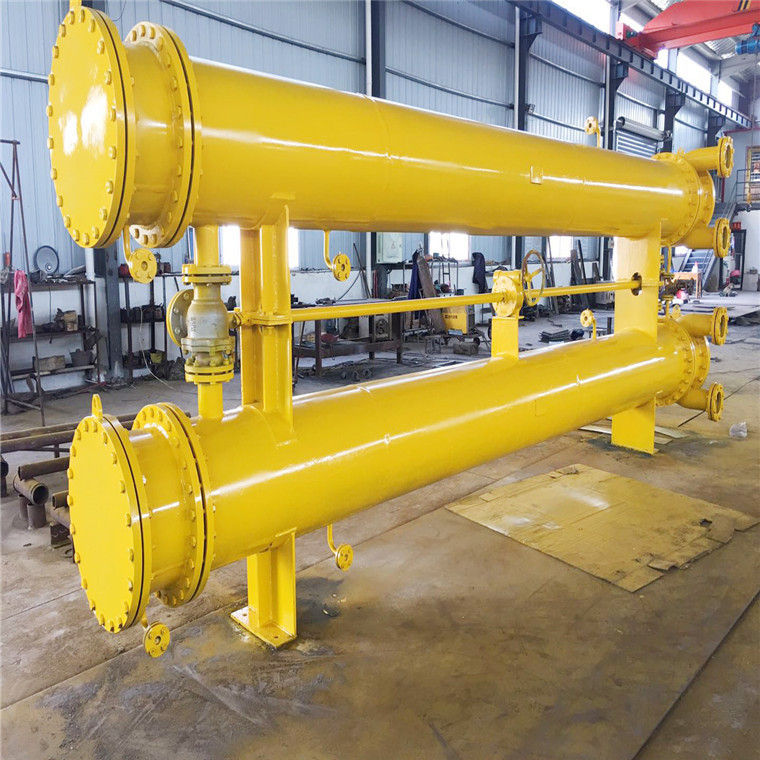
The conveying pipeline for conveying powdery materials from the sending tank to the storage bin is the key equipment of the internal bypass pneumatic conveying system. The inner by-pass pipe is composed of the main conveying pipe and the inner by-pass pipe. There are specially designed openings in the inner pipe every certain distance, so that the compressed air and the material to be delivered can move continuously and stably at low speed in the pipe with high mixing ratio, and then sent to the storage bin.
1.2. Model meaning
DF-**-##
DF -- Model
**--------Diameter (mm)
##---------Length (mm)
1.3. Structural features
The inner bypass pipe is composed of outer pipe, inner pipe, inner pipe opening baffle, flange and positioning mark. The inner pipe is equipped with a drainage and damping partition board to realize the turbulent transportation of fly ash through the self-regulation of the conveying pipeline.
1.4. Working principle
The conveying air passes through the main conveying pipe and the inner bypass pipe at the same time. The specially designed opening on the inner bypass pipe forms turbulent flow on the main conveying pipe. Under the turbulent state, the fly ash accumulates and is divided into material sections. The material section is continuously divided, moved and blown to transport the materials forward. The inner by-pass pipeline is different from the conventional positive pressure pneumatic conveying system in conveying mechanism. It changes suspension conveying to static pressure conveying, and the conveying concentration can reach more than one time of the conventional single pipe positive pressure conveying system. The conveying speed is low and the pipe is not blocked. Thus, the working conditions of low concentration, high flow rate, high abrasion, easy pipe blockage and high energy consumption of conventional positive pressure transportation are changed, which can solve the problem of high output and high dense phase transportation The ideal scheme of abrasive materials represents the advanced level of ash removal technology.
2. Main technical parameters
See table 26-1 for main technical parameters of inner bypass delivery pipe.
Table 26-1 main technical parameters of inner bypass pipeline
| Parameter | Specification | |||||||
| DN100 | DN125 | DN150 | DN175 | DN200 | DN250 | DN300 | DN350 | |
| Working pressure (MPa) | 1 | |||||||
| Pipe material | Hot rolled seamless steel pipe | |||||||
| Pipe OD (mm) | 114 | 140 | 168 | 194 | 219 | 273 | 325 | 377 |
| Pipe wall thickness (mm) | 6 | 6 | 6 | 7 | 7 | 8 | 8 | 10 |
| Weight (kg/m) | 23 | 28 | 33 | 40 | 46 | 60 | 80 | 117 |
| Connection form | PN1.0 standard flange or direct welding form | |||||||
| Length (m) | Standard length is 2,4,6 (can also be made on request) | |||||||
3. Selection method
With the system design, according to the output of the conveying system, conveying distance, material density calculation and selection. The pressure gauge and pressure transmitter are determined according to the system.
4. Scope of supply and order requirements
4.1. Scope of supply
The internal bypass pipeline is generally supplied in complete set with other equipment of the system, and the whole pipeline is supplied without spare parts.
4.2. Order requirements
With the system design, the installation position and pipeline layout shall be indicated when ordering.